
Solving the CJK Editability Gap
Standard design tools often struggle with vertical typography, forcing designers to manually rotate layers and breaking the "live text" editability required for scalable design systems.
The Constraint
Creating vertical layouts for CJK (Chinese, Japanese, Korean) scripts usually results in non-editable layers or manual, time-consuming alignment.
The Problem
Design systems for East Asian markets lack the typographic flexibility needed for efficient multilingual workflows.
High-Velocity AI Engineering
I leveraged an AI-augmented workflow (Cursor + MCP) to move from an identified friction point to a production-ready plugin available on the Figma Community.
- Editability First: Developed a logic-driven engine that toggles layout direction without losing text layer properties, ensuring designers can keep iterating post-conversion.
- Typographic Control: Integrated full controls for typographic flexibility, including paragraph spacing, line height, and line limits.
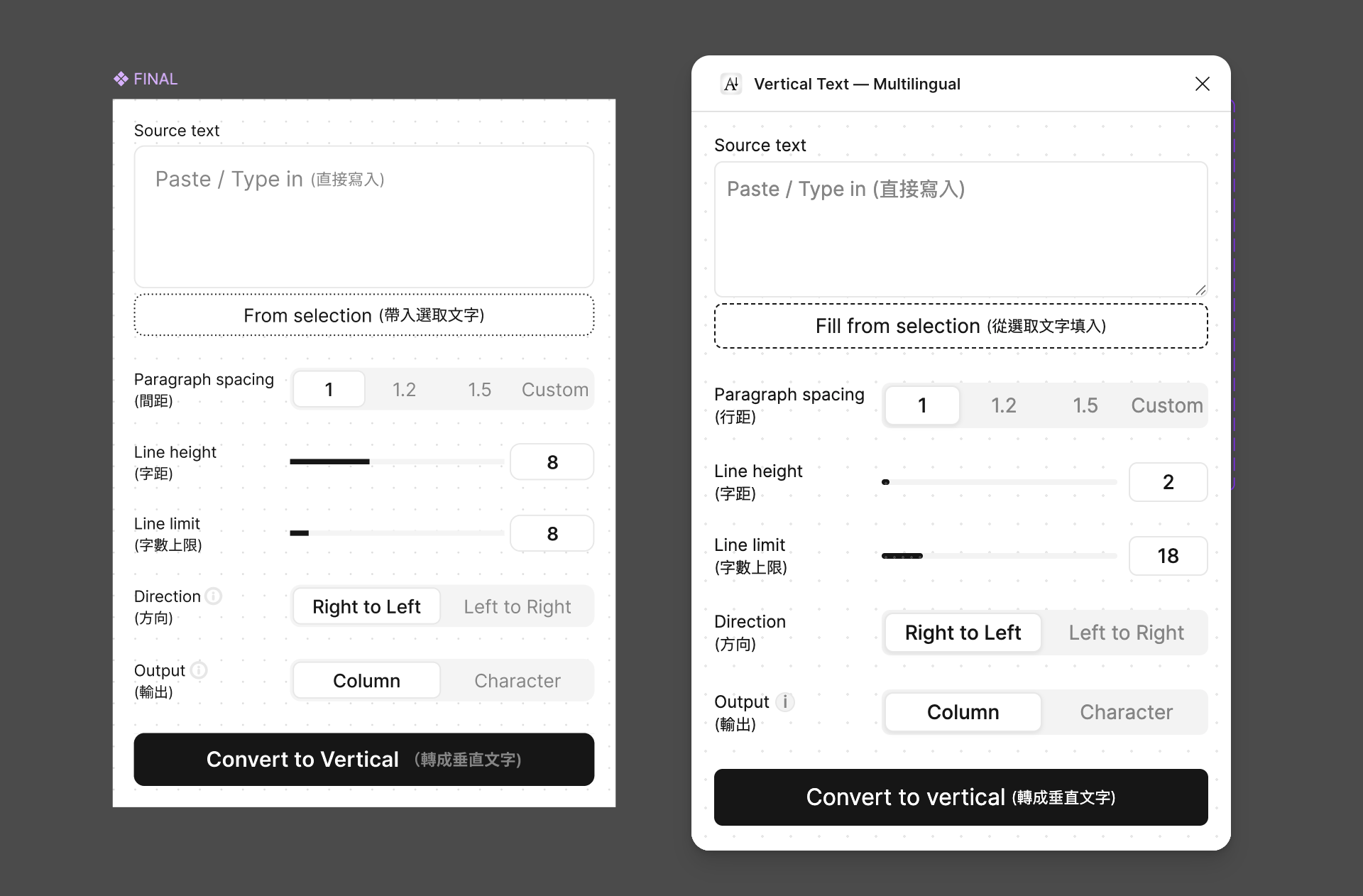
A Shipped Localisation Solution
The result is a functional utility that automates a previously manual task, enabling faster workflows.
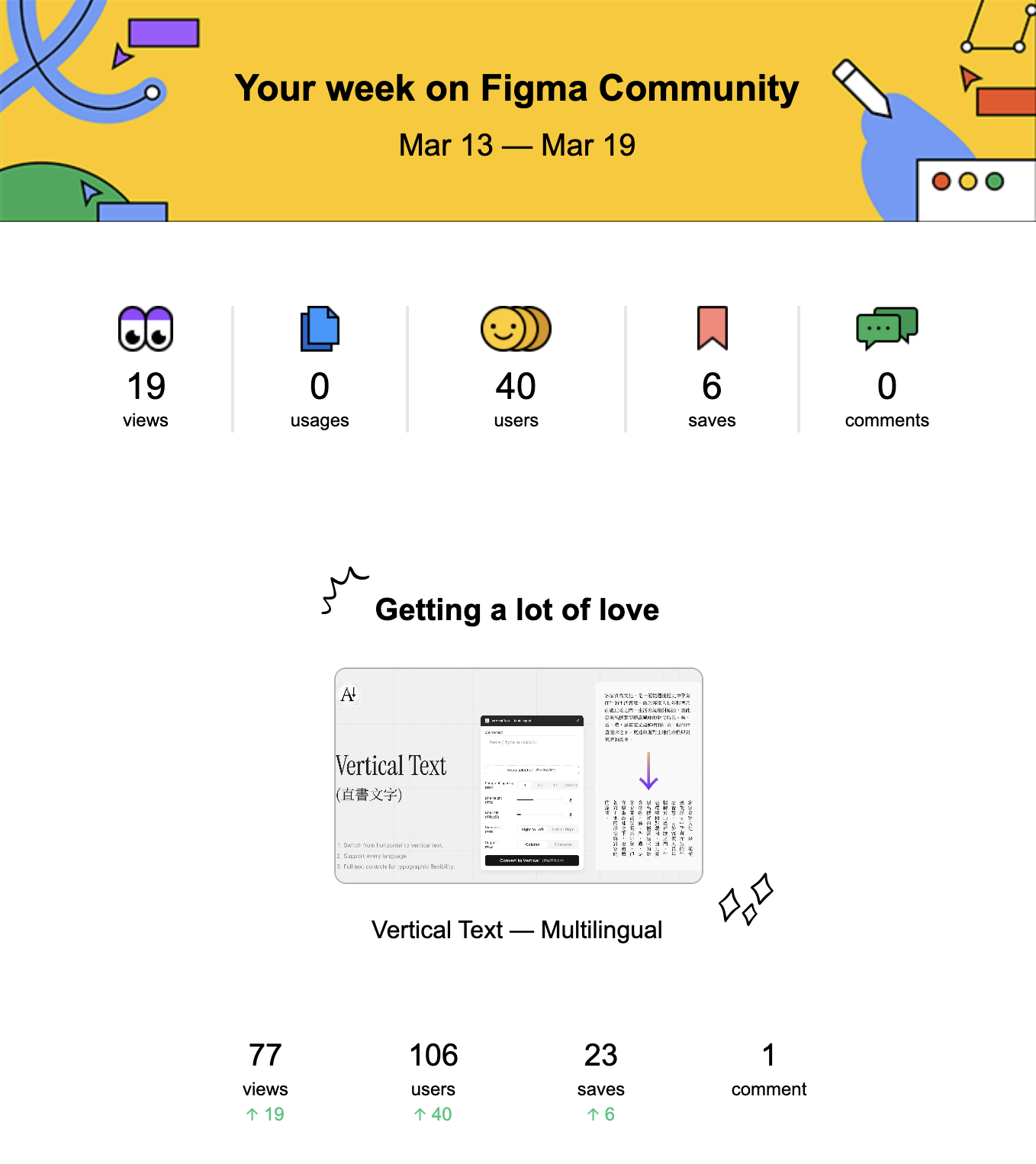
- Figma Community Launch: Successfully deployed the plugin for public use, providing immediate value to the global design community.
- Clean Typography: Proven ability to preserve text layers and layout integrity, allowing for clean, editable typography at scale.
- Velocity Proof: Validated the power of AI-powered development by taking a niche problem to a polished solution in just two days.
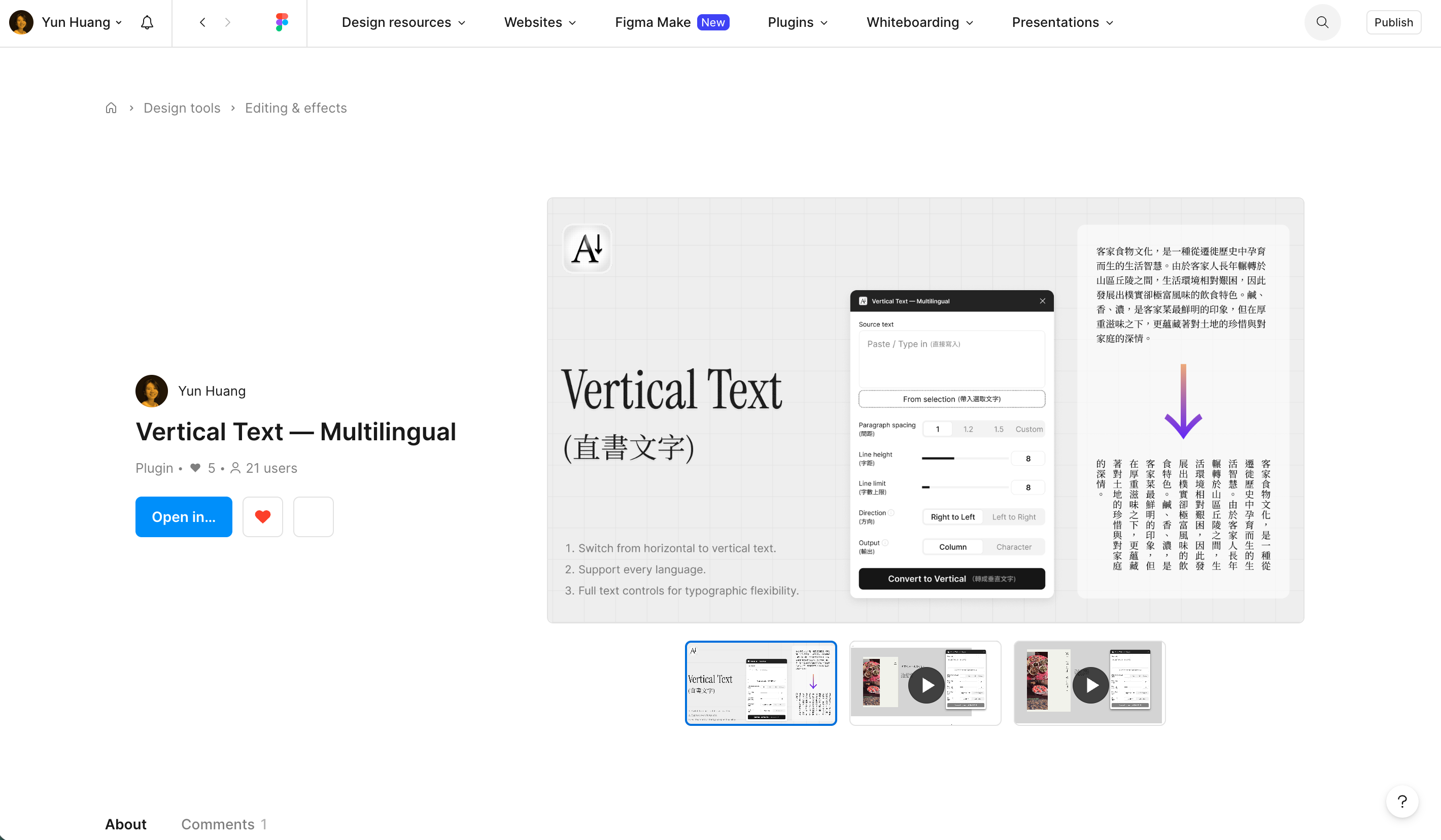
Get the plugin: Vertical Text on Figma Community